Thursday, 6 September 2012

Wednesday, 6 July 2011

06/07/2011 - Our new SRC X80 hf multiband aerial!


This week we tested the clubs new our new SRC X80 hf multiband aerial with promising results.


We could clearly hear an American station on 10 metres FM using the FT101Z transceiver.


We hope to get a bracket for the antenna so that it can be sited permanently.


Many thanks to Tim G7JYQ for the loan of the lighting tripod to mount the antenna during the test.

Wednesday, 15 June 2011

15/06/2011 - Diode radios - aka 'crystal sets'.


The club invited members to bring along crystal sets that they have built over the years, along with some more modern commercial ones from Tony M0SHA


Roger G4GGI showed a crystal set (Teletron HAX coil and GEX34 diode) and a one valve set he built about 50 years back.


Wednesday, 1 June 2011

01/06/2011 - Tony M0SHA gave a talk on PAT testing

Tony gave a very interesting talk on PAT testing and demonstrated the BattPAT testing unit.

He gave a demonstration of how to test Class I metal, Class I plastic and Class II devices and what to look out for when making a test such as appliance condition and rating plates.


Please speak to Tony if you require him to carry out any testing for you.

Wednesday, 4 May 2011

04/05/2011 - The club hosted another of our popular show and tell evenings featuring:

Andy M0ULF - Digital power/swr meter kit


Tony M0SHA - Collectable TV sets - Sony TV9-90UB (displaying 405 line picture here) and Sinclair Microvision MTVB1


James M0VLF - VLF power oscillator with heating effects


Monday, 28 February 2011

16/02/2011 - Homebrew Antenna Tuner by James Sales M0VLF


James, M0VLF, gave a brief talk on the construction of his homebrew antenna tuner for HF.


This has been tested and has showed promising results, and only requires an air spaced coil, tuning capacitor and a rotary switch - the most difficult and expensive part to source is the enclosure itself!

M0SHA has a circuit diagram available for those interested in this easy to build tuner.

Feel free to contact James or Tony for construction / design tips at one of the meetings.


James, with his tuner.

02/02/2011 - Optical Communications by Tony Fell M0SHA

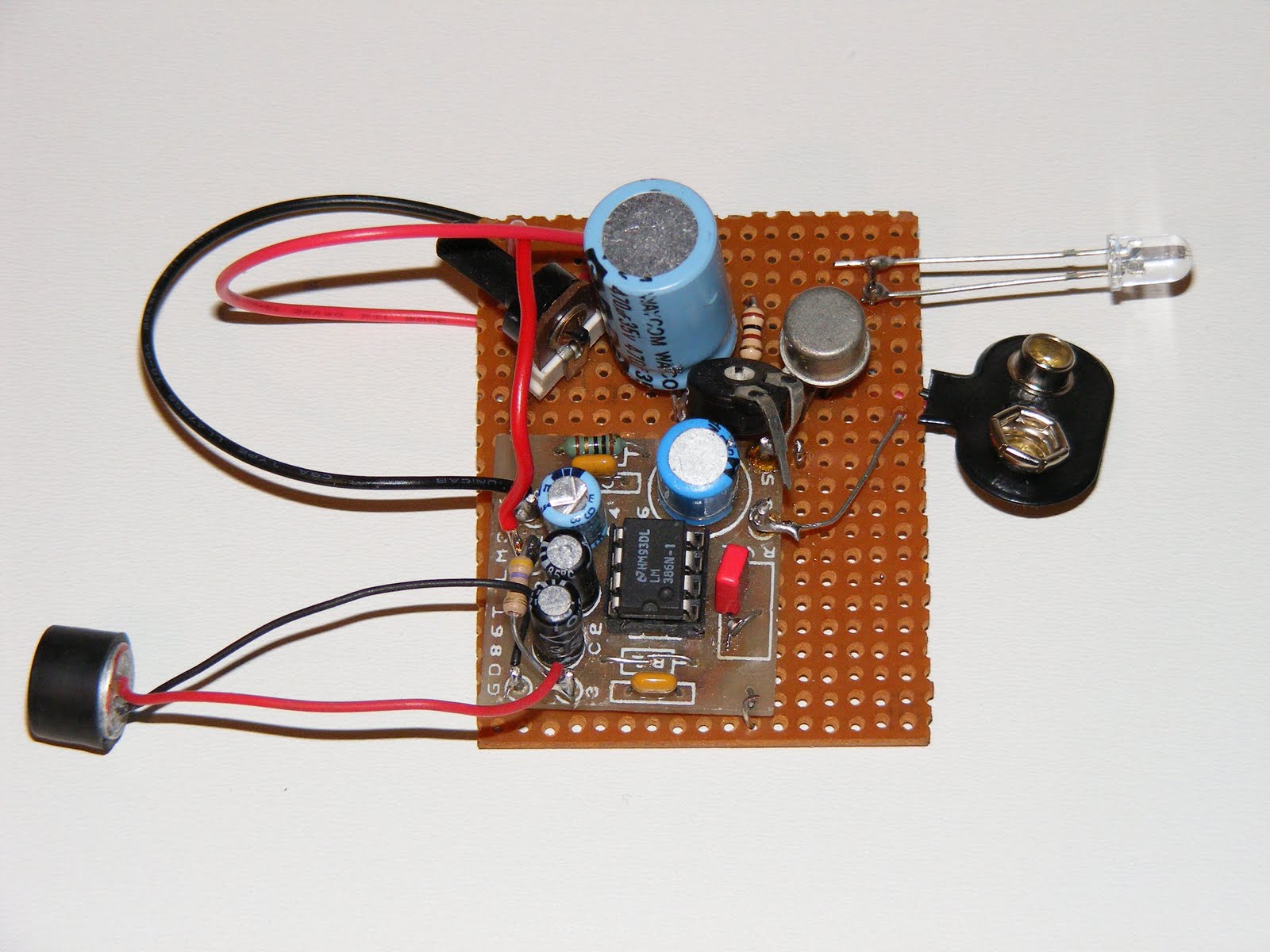
Tony, M0SHA, kindly gave us a very interesting talk on optical communications using a homebrew tranceiver which demonstrated the design , setup and operation of the mode.


He also had a very interesting display of various optoelectronic devices that can be pressed into service to produce a good quality piece of equipment for DX work.


For those that are interested in building such a device, please contact Tony directly at one of the club meetings.


For further information also see the excellent Blue Haze website: http://www.bluehaze.com.au/modlight/index.html


Saturday, 2 October 2010

OUR NEW LOCATION!

From Wednesday the 6th October the SHARES meeting venue will be at the recently constructed building to the right side of St Andrews Church in Maple Road, Surbiton KT6 4DT.

This meeting will take place in the Blue Room accessed through the front main entrance. Everything is at ground floor level.

We have been asked if it was possible to move our meeting dates to the first and third Thursday of each month, which would make the following meeting on the 21st of October. Please email if you would find this inconvenient.

Our new venue has limited off street parking, but there is a local car park at St Philips Road, a short walk from us via St Andrews Road, and this is free after 18.30pm.

Please look at the map to see the locations mentioned.


Topics for the next meetings will be decided shortly.

Thursday, 10 June 2010

SHARES Field Day

We have use of a field planned for July, and propose the weekend of the 24th/25th
This will give us two days with the opportunity for those who wish to camp overnight. And for others the opportunity to visit on either or both days. For those who have been before the site is about 30 minutes drive down the A3 and there is also a rail link (Weekend timetables permitting)

We already have the G5RV in place so some of the set up work is done.
We have a Gazebo, generator and table and we should be able to operate on all of the HF bands.

For your own comfort you may wish to bring some refreshments, a seat, tent etc (if you want to camp overnight)

There is a pub down the road which serves food but it can be expensive so bringing a pack lunch then having a pint in the pub may the cheapest option

-
The site can be accessed by car and is a short train journey from Surbiton Station.

For those with cars we will meet at the club at 10:45 for 11:00 departure.
If you have space in your car for equipment and or passengers please let us know also if you would like transport.

Here is a map showing directions -


When you arrive the field is accessed by a locked gate. If you arrive by car and the gate's locked park in the lane and ask Tony who can let you in. We will keep the site locked to deter unwanted guests


Those arriving by train can take the footpath running by the railway from Horsley station

Monday, 10 May 2010

Our next meeting is on Wednesday the 12th May.

The meeting will include pictures and video from the recent club trip to the Wireless
Museum.

The usual refreshments will be available.

This picture is of Gerry Wells at the Museum in Dulwich

Sunday, 24 January 2010

Wednesday meeting


Some forthcoming events -
- Junk Sale- Raffle
- We have received confirmation of our table at the Kempton Park rally on the 18th April and hope to see you all there.

They say that a picture paints a thousand words so here are the photos from James' WI FI demonstration


VY 73

Monday, 23 November 2009

Our next meeting

All,
Here is our meeting schedule.
The next meeting is on Wednesday the 9th december.

Tony has found the following useful link http://www.vintage-radio.info/docs/ The page contains a selection of scanned technical and historic documents that should be of interest to vintage radio collectors etc.

Here is our current schedule -


09/12/09 On the air/ RTTY
23/12/09 No meeting
13/01/10 AGM
27/01/10 VLF Demonstration and talk
10/02/10 On the air evening
24/02/10 DF Demonstration
10/03/10 Guest Speakers e.g. BDXC

Thursday, 12 November 2009

MMANA - GAL Presentation 11/11/2009

Thanks to all who could make it to our meeting on the 11th. Here are the notes and a link to the software for any who would like to try modelling an antenna.

As we discussed, its best to use one of the existing models supplied in the library and modify it to look like the antenna you are testing.

73 Rex - G8UBJ

MMANA-GAL – Shares presentation 11/11/2009 - G8UBJ

MMANA-GAL is an antenna-analyzing tool based on the moment method, which was introduced in MININEC.

Once upon a time when you dreamed about an antenna you had to actually build it and hang it in the sky to find out anything about it.
With MMANA you can construct antennas on your home computer and see precisely how they
perform. What can MMANA tell you about your antenna?

  • Exact resonant frequency.

  • Radiation resistance at the antenna feed point.

  • SWR for a range of frequencies across the band.

  • Precise length and thickness of wire or aluminium tubing required.

  • What the radiation pattern looks like; the vertical take off angle.

  • Effect of height above ground and the quality of ground.

  • Gain and front to back ratio.

  • The inductance or capacitance needed to match it.

  • The diameter and number of turns of wire for a loading coil or trap.

  • Optimise! Eg. Adjust Yagi element length and spacing automatically.

You can test many interesting things with MMANA, like bending your dipole to fit it into your yard, check the effect of height above ground of the ends of your inverted V, or calculate the gain and performance of your favourite Uda Yagi.

MMANA helps eliminate the uncertainties that plague antenna construction and lets you play antennas inside on a rainy day without upsetting the XYL.


ANTENNA ANALYSIS BY COMPUTER

With the proliferation of personal computers since the early 1980s, significant strides in computerized

antenna system analysis have been made. It is now possible for the amateur with a relatively inexpensive computer to evaluate even complicated antenna systems. Amateurs can obtain a greater grasp of the operation of antenna systems—a subject that has been a great mystery to many in the past.

The most commonly encountered programs for antenna analysis are those derived from a program developed at US government laboratories called NEC, short for “Numerical Electromagnetics Code.” NEC uses a “Method of Moments” algorithm. The mathematics behind this algorithm are pretty formidable to most hams, but the basic principle is simple. In essence, an antenna is broken down into a number of straight-line wire “segments,” and the field resulting from the RF current in each segment is evaluated by itself and also with respect to other mutually coupled segments. Finally, the field from each contributing segment is vector-summed together to yield the total field, which can be computed for any elevation or azimuth angle desired.

The effects of flat-earth

ground reflections, including the effect of ground conductivity and dielectric constant, may be evaluated as well. In the early 1980s, MININEC was written in BASIC for use on personal computers. Because of limitations in memory and speed typical of personal computers of the time, several simplifying assumptions were necessary in MININEC, which limited potential accuracy. Perhaps the most significant limitation was that “perfect ground” was assumed to be directly under the antenna, even though the radiation pattern in the far field did take into account real ground parameters. This

meant that antennas modelled closer than approximately 0.2 l over ground sometimes gave erroneous impedances and inflated gains, especially for horizontal polarization.

Despite some limitations, MININEC represented a remarkable leap forward in analytical capability. See Roy Lewallen’s “MININEC— the Other Edge of the Sword” in Feb 1991 QST for an excellent treatment on pitfalls when using MININEC.

Because source code was made available when MININEC was released to the public, a number of programmers have produced some very capable versions for the amateur market, many incorporating exciting graphics showing antenna patterns in 2D or 3D. These programs also simplify the creation of models for popular antenna types, and several come with libraries of sample antennas.

By the end of the 1980s, the speed and capabilities of personal computers had advanced to the point where PC versions of NEC became practical, and several versions are now available to amateurs. Like MININEC, NEC is a general-purpose modelling package, and it can be difficult to use and relatively slow in operation for certain specialized antenna forms. Thus, custom software has been created for quick and accurate analysis of specific antenna varieties, mainly Yagi arrays.

The most difficult part of using a NEC-type of modelling program is setting up the antenna’s geometry—you

must condition yourself to think in three-dimensional coordinates. Each end point of a wire is represented by three numbers: an x, y and z coordinate.

Websites -

Hamsoft Website - http://mmhamsoft.amateur-radio.ca/

Here is the antenna we modelled - G5RV JR

Here is the input to MMANA-GAL and some of the resulting infomation -

3d plot

Geometry

View


2D Plot

Friday, 30 October 2009

Next meeting & Pics

All,
Thanks to Phil for his talk on the One Valve receiver.


Here is our meeting schedule. The next meeting is on Wednesday the 11th November where Rex will be giving a presentation on antenna modelling software.

Evan will be giving up a presentation on
Operating Digital Modes on HF on the 25th

11/11/09 Antenna modelling with MMANA-GAL
25/11/09
Operating Digital Modes on HF
09/12/09 On the air/ RTTY

23/12/09 No meeting
13/01/10 AGM

27/01/10 VLF Demonstration and talk
10/02/10 On the air evening
24/02/10 DF Demonstration
10/03/10 Guest Speakers e.g. BDXC


SHARES radio club meet at the Coach House, Church Hill Road, Surbiton on the 2nd and 4th Wednesday of each month at 8:00pm - 9:30pm

We are a short walk from Surbiton mainline station.

Here is a map showing our loaction -

Tuesday, 20 October 2009

Next Shares meeting 28th October

All,
Here is our meeting schedule. We meet on the 2nd and 4th Wednesday of each month. The next meeting is on Wednesday the 28th October where Phil Moss will be giving a presentation on a single valve receiver.

28/10/09 A single valve receiver
11/11/09 Antenna modelling with MM-ANA
25/11/09
Operating Digital Modes on HF
09/12/09 On the air/ RTTY
23/12/09 No meeting
13/01/10 AGM

27/01/10 VLF Demonstration and talk
10/02/10 On the air evening
24/02/10 DF Demonstration
10/03/10 Guest Speakers e.g. BDXC


SHARES radio club meet at the Coach House, Church Hill Road, Surbiton on the 2nd and 4th Wednesday of each month at 8:00pm - 9:30pm

We are a short walk from Surbiton mainline station.

Here is a map showing our loaction -


Friday, 9 October 2009

A New Call!

Congratulations to James Sales who has passed both his foundation and intermediate exams to take the call - 2E0TTL

VY 73 and well done James, we look forward to working you in the near future.

Tuesday, 6 October 2009

Schedule

All,
Here is our meeting schedule. We meet on the 2nd and 4th Wednesday of each month. The next meeting is on Wednesday the 14th October.

23/09/09 Restoration of valve broadcast receivers
14/10/09

28/10/09 A single valve receiver - Phil Moss

11/11/09 Antenna modelling with MM-ANA - Rex Lester
25/11/09
09/12/09 On the air/ RTTY
23/12/09 No meeting
13/01/10 AGM

27/01/10 VLF Demonstration and talk
10/02/10 On the air evening
24/02/10 DF Demonstration
10/03/10 Guest Speakers e.g. BDXC


SHARES radio club meet at the Coach House, Church Hill Road, Surbiton on the 2nd and 4th Wednesday of each month at 8:00pm - 9:30pm

We are a short walk from Surbiton mainline station.

Here is a map showing our loaction -

Thursday, 24 September 2009

Kempton Park & RTTY

All, I hope everyone enjoyed Tony's intersting talk last night on restoring broadcast recievers. I will be keeping an eye out for potential receivers.

This email is just to keep you up to date with our planned events and activites.


This Sunday (27th) the club will be running a stall at the Kempton Park Rally.
http://www.g4cdy.co.uk/

This is indoors (So you won't get wet if it rains) and is our closest event.

If you plan to attend do pay us a visit, we will have lots of components and other intersting items for sale at competitive prices. Of course
buying from SHARES you will be supporting the club.


We have decided to re-start a club net (Hurrah I hear you say). The net will be slightly different as we will be using RTTY (No bothersome speaking involved).

Details of the net are as follows -

Frequency - 144.500 Mhz

Time 17:30GMT (6:30pm) Sunday evenings.

Mode will be AFSK 45.45 baud – Mark tone = 2125 Hz Space tone 2295 Hz.

First date for the net will be Sunday the 27th September. The net will run for an initial month to gauge interest. Content of the transmissions will include propagation forecasts and club events in addition to any other subjects club members wish to discuss.

Don't let the RTTY part put you off. Its very simple to install RTTY on your PC and get going on receive by connecting the audio output from your tranceiver to the soundcard of your PC. MMTTY which is a very easy to use RTTY program can be downloaded for free at - http://mmhamsoft.amateur-radio.ca/files/programs/MMTTY166G.exe

The MM website is at -
http://mmhamsoft.amateur-radio.ca/mmtty/

Once you have recive working information for a very simple interface for TX can be found at -
http://www.geocities.com/n2uhc/interface.html

Once you have this working you will find it can also be used to monitor or work DX on HF.. have a listen on 20M around 14.085 MHz
73 and hope to see you Sunday

Rex - G8UBJ & Tony - G7DGW

--------------------------oOo-------------------------------------------

SHARES radio club meet at the Coach House, Church Hill Road, Surbiton on the 2nd and 4th Wednesday of each month at 8:00pm - 9:30pm

We are a short walk from Surbiton mainline station.

Here is a map showing our loaction -

Monday, 21 September 2009

Next SHARES meeting - Wednesday the 23rd September

All,
Our next meeting will be on Wednesday the 23rd September.

This meeting Tony G7DGW will be giving a presentation -

RESTORING VALVE BROACAST RECEIVERS

From now on to keep everyone up to date and make it easier for potential new club members I will include directions and dates for future club meeting on each post of the blog.

SHARES radio club meet at the Coach House, Church Hill Road, Surbiton on the 2nd and 4th Wednesday of each month at 8:00pm - 9:30pm

We are a short walk from Surbiton mainline station.

Here is a map showing our loaction -

Tuesday, 30 June 2009

A day out


Our day out on the 27th June was a big success.

We now have a G5RV and long wire antennas installed at the site so in future we will have less work to set up.

The day gave us a good opportunity to fully survey the site and we have found a good place to operate from which is away from the road. And of course our survey included a visit to the local pub which met with the team's approval.

As Tony already observed, the site is very quiet from an electrical point of view (although not as quiet as Phil's FT-101 would have us believe :-)

Thank you to all who participated and I hope you have now all recovered (especially the antenna gang).

Next visit in addition to the current equipment, we need to take -

  • A rubbish sack
  • More catering (BBQ?) and press the kettle James brought into service!
  • insect repellent (I have some spray stuff from Australia that works)

73 M0SHA